
Louisiana Mold Remediation License: What the Law Says and How to Check a Company
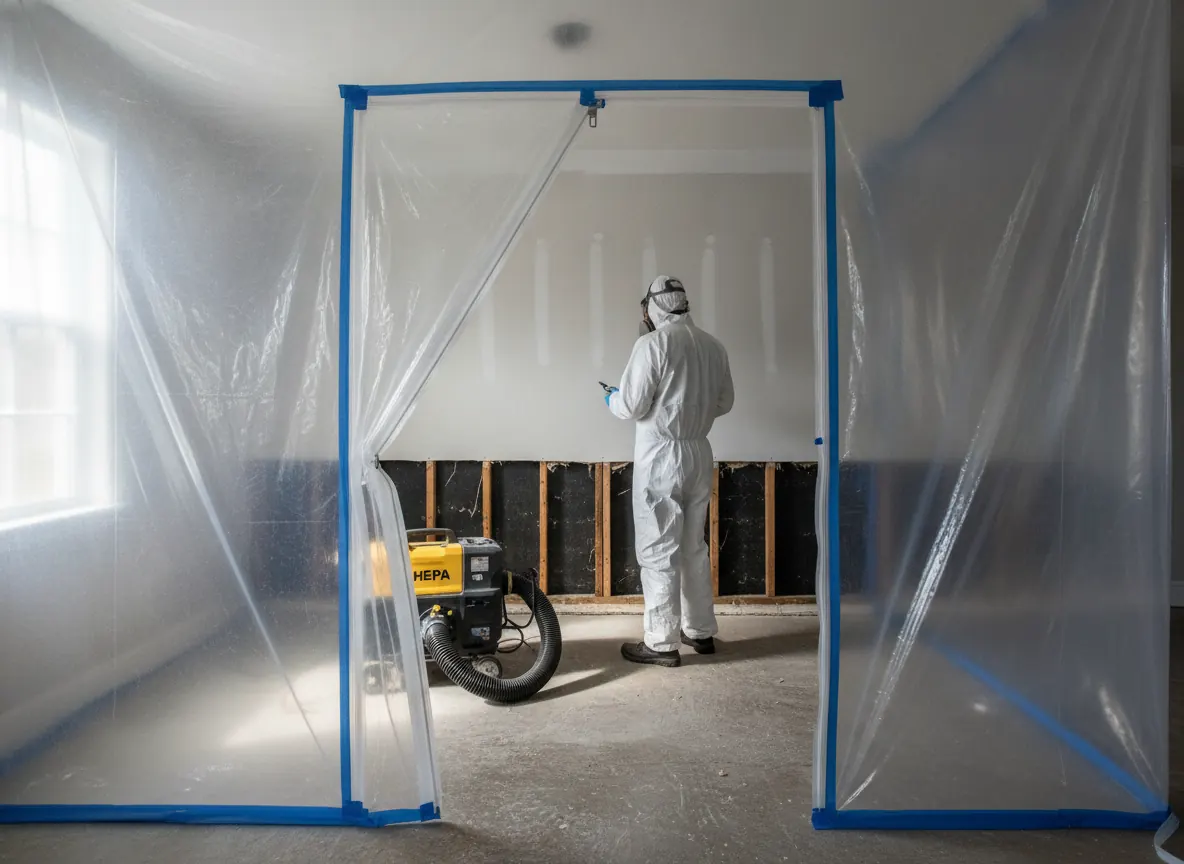
If you are hiring someone to deal with mold in New Orleans, the first useful question is not about price. It is whether the company is allowed to do the job. Louisiana does license mold remediation, and the rules changed in 2022, so a lot of older web pages describe a law that no longer exists. Some guides even say Louisiana does not license mold work at all. That is wrong.
This post walks through what current Louisiana law says, what it takes for a company to hold the license, who is exempt, and how to check a company yourself in a few minutes.
The short version. Louisiana requires a Mold Remediation license from the Louisiana State Licensing Board for Contractors (LSLBC) for mold remediation projects of about $7,500 and up (La. R.S. 37:2150.1). Before you sign, look up the company's license on the LSLBC website.
Do you need a license for mold remediation in Louisiana?
For bigger jobs, yes. Louisiana's contractor law counts as a "contractor" anyone who undertakes, bids or offers to do "any mold remediation for which the project value is seven thousand five hundred dollars or more" (R.S. 37:2150.1). The same section defines a mold remediation contractor as someone who removes, cleans, sanitizes, demolishes or otherwise treats mold or mold-contaminated material, including preventive work, on a project of that value.
Three details matter in practice:
- Project value is the whole job. It includes labor, materials, rentals and all direct and indirect costs, no matter who pays them (R.S. 37:2150.1).
- Splitting a contract does not get around it. If a job is divided to stay under a threshold, the law treats the parts as one contract (R.S. 37:2158).
- The wording at the line differs. The statute says "$7,500 or more." One LSLBC page says a license is needed when the value "exceeds" $7,500. If your quote sits near that number, treat it as a licensed job and ask for the license.
Routine cleaning that is not aimed at mold is not mold remediation under the definition. A whole-house job after a flood will usually cross the line. A small bathroom ceiling usually will not. The New Orleans mold remediation cost guide shows where typical jobs fall.
What changed in 2022: the old mold law was repealed
Mold remediation used to have its own chapter in Louisiana law, R.S. 37:2181 through 37:2192. Act 195 of 2022 (House Bill 602), effective August 1, 2022, repealed that chapter and moved mold remediation into the general contractor law, R.S. 37:2150 and the sections after it. Several of those sections were amended again in 2025.
If a website, a contract or a company's paperwork cites R.S. 37:2181, it is quoting repealed law. That is not proof of bad faith, since plenty of reference sites were never updated, but it is a reason to check the license yourself instead of trusting a printed claim.
What a company needs to hold the license
Mold remediation is one of the major license classifications the LSLBC issues (R.S. 37:2156.1). To get it, a company has to meet these requirements:
| Requirement | What the law says | Source |
|---|---|---|
| Training | At least 24 hours of training in mold remediation and basic mold assessment before the license is issued | R.S. 37:2156.1 |
| Liability insurance | At least $100,000 (or a liability trust fund of the same amount) | R.S. 37:2156.1 |
| Workers' compensation | Certificate of coverage submitted with the application | R.S. 37:2156.1 |
| Net worth | $25,000 or more, or an irrevocable letter of credit | R.S. 37:2156.1 |
| Background and exam | Background investigation; the qualifying party meets the exam requirements, including the Louisiana business and law requirement | R.S. 37:2156.1 |
The license tells you a company met these conditions when it applied. It does not tell you the company is good at the work, so still compare written scopes and ask questions.
Who does not need a mold license
Louisiana exempts people working on their own homes. Under R.S. 37:2157, a residential property owner can do mold remediation on their own property, and an owner or tenant (or their managing agent or employee) can do it on property they own or lease. The exemption does not cover an agent or employee who does mold remediation for the public as a business.
Being allowed to do it yourself is different from it being a good idea. EPA says homeowners can usually handle a moldy area of less than about 10 square feet. Past that, EPA points to professional remediation guidance. See mold removal and remediation for what a full job looks like.
The two-company rule: testing and removal stay separate
In Louisiana, a mold remediation contractor may not also do the mold assessment on the same property, or own the company that does (R.S. 37:2158). The law also requires the remediation contractor to give a written report to each customer it works for.
Louisiana's current contractor law defines a mold remediation contractor but not a mold assessor, and the LSLBC has said that mold assessments do not require a license. So there is no state mold license to look up for an inspector. Ask an inspector about training, insurance, which lab analyzes samples, and whether they have any tie to a remediation company. The mold inspection and testing page explains when a separate assessment is worth paying for.
How to look up a mold company's license in five minutes
Get the exact name and license number in writing
A licensed contractor has to give you its name, license number, classification and current insurance certificates in writing if you ask (R.S. 37:2158). Ask before anyone opens a wall.
Search the LSLBC website
Use the contractor search on the LSLBC website or the board's LA Contractor app. Search by license number first, then by company name.
Check three things on the record
The classification should include Mold Remediation, the status should be active, and the business name should match the name on your contract.
Confirm the insurance
Ask for the liability and workers' comp certificates and check the dates. You can call the insurer named on the certificate to confirm the policy is current.
Read the contract before work starts
Check that it carries the license number and the items below. Under R.S. 37:2159, no work should begin until everyone has signed.
What a licensed mold contract has to include
For any job that needs a license, R.S. 37:2159 requires a written contract that includes:
- The full agreement between you and the contractor
- The contractor's name, address and license number
- A description of the work
- The total price, or a cost estimate for time-and-materials or cost-plus work
- Signatures of all parties, with a signed copy for each
- Current certificates of workers' compensation and liability insurance
The law also says an unlicensed contractor may not file a lien or claim on a job where a license was required. At the end of the job, ask for the written report the contractor owes you under R.S. 37:2158, and keep it with your contract and receipts.
Red flags around license claims
Louisiana makes it unlawful for any contractor, licensed or not, to publish or circulate a misleading or false claim about a license or classification in any medium, including digital platforms (R.S. 37:2163). Acting as a contractor without an active license is also unlawful, with fines and possible jail time.
Watch for a "licensed" claim with no number, a number that comes up under a different business name, a license in a different classification, or a company that offers to test and then remove the mold itself. After a storm, also see storm contractor scams in Louisiana.
About this site. NOLA Mold Remediation is a free quote service, not a mold company. You describe the problem once, and independent local companies, which may pay to receive requests, can reply with quotes. Check each company's license on the LSLBC website before you sign anything.
Frequently asked questions
Do I need a license to remove mold in my own house in Louisiana?
No. Louisiana exempts a residential owner working on their own property, and an owner or tenant working on property they own or lease (R.S. 37:2157). EPA suggests keeping do-it-yourself work to areas under about 10 square feet.
Are mold inspectors licensed in Louisiana?
Current Louisiana law licenses mold remediation contractors, not mold assessors, and the LSLBC has said assessments do not require a license. Ask an inspector about training, insurance, the lab they use and their independence from any remediation company.
What if my mold job costs less than $7,500?
A company is not required to hold the Mold Remediation license for a project under about $7,500. You can still ask for a written contract, proof of insurance and a written description of the work before it starts.
Is R.S. 37:2181 still the Louisiana mold law?
No. Act 195 of 2022 repealed R.S. 37:2181 through 37:2192 effective August 1, 2022. Mold remediation is now covered by the general contractor law starting at R.S. 37:2150.